41 required nutrients on food labels
Learn How the Nutrition Facts Label Can Help You Improve Your Health The label is required on all packaged foods made in the United States and imported from other countries. The US Food and Drug Administration (FDA) issued regulations in 2016 to update the Nutrition Facts label. This was the first major change to the label since it was introduced in 1994. Most items had the updated label by January 1, 2021. Food labeling: MedlinePlus Medical Encyclopedia Feb 17, 2021 — Vitamin D, calcium, iron, and potassium are the only micronutrients required to be on the food label. Food companies can voluntarily list ...
Food Labels | Nutrition.gov HHS, Food and Drug Administration, Center for Food Safety and Applied Nutrition Learn the difference between total sugars and added sugars, and discover how the Nutrition Facts Label can help you choose foods that are lower in added sugars. Folate and Folic Acid on the Nutrition and Supplement Facts Labels

Required nutrients on food labels
Food Labeling Requirements for FDA Compliant Label Design Statement of Identity. This is simply the food's name and should be the most prominent print on the packaging. The brand name is not the statement of identity. Ideally, it should not be more conspicuous than the food's name. The old packaging of Farm Rich French Toast Sticks had the food's name printed more prominently than the brand name. How To Read A Food Nutrition Label | Gobble For example, the USDA recommends that most people get 1,000 mg of calcium per day. So, if a serving of food contains 100 mg of calcium, this means the serving contains 10% Daily Value of calcium. The same applies to items on the food label you may want to avoid, like fat and cholesterol. For example, 15 grams is 20% Daily Value for total fat. What is required on a food label? - USDA A meat and poultry label is required to contain 8 features. These are: the product name, inspection legend and est. number, handling statement, net weight statement, ingredients statement, address line, nutrition facts, and safe handling instructions. These requirements are found in the Code of Federal Regulations (9CFR 317.2/381 Subpart N).
Required nutrients on food labels. Nutrition Labels 101: What's Required? What's Optional? Total carbohydrates is a required listing unless there is less than 1 gram, at which point it can be expressed as "contains less than 1 gram," or if less than 0.5 grams per serving, it can be expressed as zero. Sugars are the sneaky nutrient found naturally in many "healthy" foods, including fruit and milk. Understanding Food Nutrition Labels - American Heart Association When choosing among different brands or similar products, compare labels and choose foods with less of these nutrients when possible.. 4 - Get enough of the beneficial nutrients. Make sure you get enough of the nutrients your body needs, such as: calcium, choline, dietary fiber, iron, magnesium, potassium, and vitamins A, C, D and E.* Understanding Food Labels - Nutrition: Science and Everyday Application Figure 1.12. "The 5 required types of information on a food label" by Alice Callahan is licensed under CC BY-NC 4.0 "Corn muffin ingredient list" by Alice Callahan is licensed under CC BY-NC 4.0; Figure 1.13. Part of a nutrition fact label by Alice Callahan, CC BY 4.0, edited from "Nutrition Facts Label" by C.D.C. is in the Public ... What is required on a feed label? - bie.curwensvillealliance.org Label Requirements for Feed sold in bags or other containers It may appear on the bag or container itself or on an attached tag or label: Net weight of the contents. Beside above, what are the 5 required food label components? They include: Calories. Cholesterol. Total Carbohydrate. Dietary fiber. Sugar. Total fat. Sodium. Protein. Then, how ...
Understanding Ingredients on Food Labels | American Heart ... Mar 06, 2017 · Food labels are an important source of information about calories and the nutritional value of the foods you eat, a crucial tool in building a heart-healthy diet. The Nutrition Facts information is always displayed in the same orderly fashion and helps you understand how much of certain nutrients that you need to limit are contained in the ... Understanding Food Labels | The Nutrition Source | Harvard T.H. Chan ... Under the Food Allergen Labeling and Consumer Protection Act of 2004, eight major food allergens—milk, fish, tree nuts, peanuts, shellfish, wheat, eggs, and soybeans—are required to be listed in a "contains" statement near the Ingredients list if present in a food. An example would be "contains wheat, milk, and soy." How To Read Food and Beverage Labels | National Institute on Aging In fact, product dates are not required by federal regulations and are added voluntarily by manufacturers. Learn more about food safety and older adults. How to read the Nutrition Facts label. The U.S. Food and Drug Administration (FDA) requires a Nutrition Facts label on most packaged foods and beverages. At the top of the Nutrition Facts ... What is required on a feed label? - te.youramys.com Vitamin D, Potassium, and Minerals Vitamins A and C will no longer be required on the FDA's Nutrition Facts labels (though manufacturers may still include them if they choose), while Vitamin D and Potassium will now be required. Broadly speaking, the Guaranteed Analysis (GA) is the nutrient profile found on the back of the bag or can.
Specific nutrient content claim requirements - Canadian Food Inspection ... The food contains: (a) 0.3 g or more of omega-3 polyunsaturated fatty acids per reference amount and serving of stated size; or. (b) 0.3 g or more of omega-3 polyunsaturated fatty acids per 100 g, if the food is a prepackaged meal. Must comply with requirements and conditions for making a nutrient content claim. Understanding Food Nutrition Labels | American Heart Association When choosing among different brands or similar products, compare labels and choose foods with less of these nutrients when possible.. 4 - Get enough of the beneficial nutrients. Make sure you get enough of the nutrients your body needs, such as: calcium, choline, dietary fiber, iron, magnesium, potassium, and vitamins A, C, D and E.* Convert Units of Measure for Nutrients on Nutrition Facts Labels Aug 15, 2019 · The compliance date for these and other changes related to the Nutrition Facts and Supplement Facts labels is January 1, 2020, for manufacturers with $10 million or more in annual food sales. USDA ERS - Food Labeling Food package nutrition labels The Nutrition Facts Label (NFL), mandated through the 1990 Nutrition Labeling and Education Act (NLEA), is a familiar feature on packaged food. The label has changed only slightly since its inception in 1994, with trans fat added in 2006 to the nutrients required to be listed.
Bay Tech Label - Nutritional Labels
Food Label Claims: What You Can and Can't Trust - WebMD Here's how to decipher food nutrition labels. Health & Diet ... Subpart E — Specific Requirements for Health Claims." FDA: "Label Claims for Conventional Foods and Dietary Supplements ...

New Food Labeling Regulations in Europe | NiceLabel Blog
My Food Product: Do I Need Nutrition Facts On My Labels? This is the number one rule that requires nutrition fact labeling. If any exemptions are met, your food still has to include nutrition facts if the label has any nutrient claims. Small businesses (your own or any that sell your product) that have more than $50,000 of food sales AND more than $500,000 of total sales.

How to Read Food Nutrition Facts Labels | Diet Database
Nutrition Facts Labeling — FDA Reader The FDA regulates nutritional information panels, their formats, and requirements. Nearly all packaged products require nutrition information although exemptions do exist. You can calculate the nutrition contents of a food using an online nutrition calculator or via a lab analysis of a food sample.. The requirements for nutrition labels may vary depending on:

Sunshine Cat Cafe Gourmet Seafood Essentials Dry Cat Food - Shop Cats at H-E-B
Optional Nutrients On The Food Label - LabelCalc What Nutrients are Optional on the Food Label? Mandatory vs. Voluntary Ingredients. As Gregory discovered, understanding the nutrition facts label can be challenging for first-time food manufacturers who are unfamiliar with FDA labeling guidelines. Lengthy documents with complex wording make it difficult to understand exactly what is expected ...

AAFCO and Your Pet Food Label
Food Labels | CDC If you eat the whole thing, you are eating 8 times the amount of calories, carbs, fat, etc., shown on the label. Total Carbohydrate shows you types of carbs in the food, including sugar and fiber. Choose foods with more fiber, vitamins, and minerals. Choose foods with lower calories, saturated fat, sodium, and added sugars. Avoid trans fat.
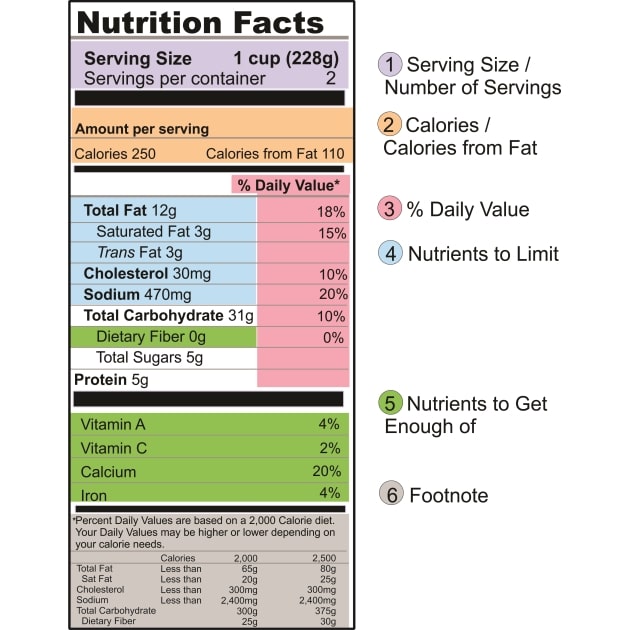
Nutrition Fact Labels Are Required To List Amounts Of Which Nutrient - Bios Pics
How to Understand and Use the Nutrition Facts Label | FDA Dietary fiber, vitamin D, calcium, iron ad potassium are nutrients on the label that Americans generally do not get the recommended amount of. They are identified as nutrients to get more of....

Food Program: Cottage Food Operations - Community Development Agency - County of Marin
Understand Food Labels - UF/IFAS Extension Marion County 2. Number of calories (In yellow): This chocolate's serving size is 30g and it has 130 calories. If you eat the whole bar, you will be ingesting 370 calories. Important note: In most labels, calories and nutrients are described by serving size only, not by the amount in the entire package. This label is a variation of most labels, this is a ...

Sabah Seafood: Sabah Seaweed Recipe - Salad
The New Nutrition Facts Label | FDA En Español (Spanish) The U.S. Food and Drug Administration (FDA) has updated the Nutrition Facts label on packaged foods and drinks. FDA is requiring changes to the Nutrition Facts label based on...

Do Food Labels Even Matter? Here's Why I Say YES. - Real Mom Nutrition
PDF Food Labeling Guide Food Labeling Guide Additionalcopies are available from: Office of Nutrition, Labeling, and Dietary Supplements HFS-800 Center for Food Safety and Applied Nutrition Food and Drug Administration...

How to understand nutritional food labels
FDA Food Product Labeling & Packaging Requirements | ESHA Research Mandatory nutrients (total calories, total fat, saturated fat, trans fat, cholesterol, sodium, total carbohydrate, dietary fiber, total sugars, added sugars, protein, vitamin D, calcium, iron, potassium) Placement: In general, place the Nutrition Facts Label on the PDP or the Information Panel, near the ingredient statement. Ingredient Statement

How to Read Food Labels | Institute of Health Sciences
eCFR :: 21 CFR Part 101 -- Food Labeling The Nutrition Facts label must be in the format required in § 101.9(c) and . The Nutrition Facts label must be in a size that permits the prospective purchaser to be able to easily read the nutrition information contained in the Nutrition Facts label on the article of food in the vending machine.

Corn Flakes Label - Top Label Maker
Food labelling - Food and nutrition | NHS inform Nutrition labels must display the amount of energy (calories and kilojoules) and the amount of fat, saturated fat, carbohydrates, sugars, proteins and salt (all expressed in grams) present in 100g (or 100 ml) of the food.

Not Buying Anything: Truth In Food Labelling Monday
How to read food labels | healthdirect Energy: A kilojoule is a measure of energy. To lose weight, you need to eat and drink fewer kilojoules (kJ) than you use. You should limit your intake of discretionary or junk foods — i.e. those that have more than 600kJ per serve.

Sulfur Plus | DeltAg
Food Labeling & Nutrition | FDA Food labeling is required for most prepared foods, such as breads, cereals, canned and frozen foods, snacks, desserts, drinks, etc. Nutrition labeling for raw produce (fruits and vegetables) and...

How to understand nutritional food labels
What is now required on a nutrition label? - Vivu.tv The Nutrition Facts label can help you learn about the nutrient content of many foods in your diet. The Nutrition Facts label must list: total fat, saturated fat, trans fat, cholesterol, sodium, total carbohydrate, dietary fiber, total sugars, added sugars, protein, vitamin D, calcium, iron, and potassium.

30 Mountain Dew Ingredients Label - Labels For You
What is required on a food label? - USDA A meat and poultry label is required to contain 8 features. These are: the product name, inspection legend and est. number, handling statement, net weight statement, ingredients statement, address line, nutrition facts, and safe handling instructions. These requirements are found in the Code of Federal Regulations (9CFR 317.2/381 Subpart N).
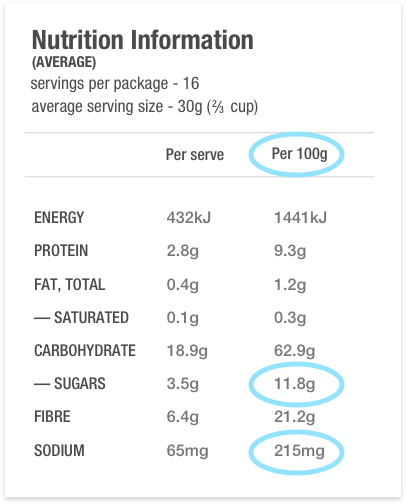
Core Naturopathics | How to read food labels
How To Read A Food Nutrition Label | Gobble For example, the USDA recommends that most people get 1,000 mg of calcium per day. So, if a serving of food contains 100 mg of calcium, this means the serving contains 10% Daily Value of calcium. The same applies to items on the food label you may want to avoid, like fat and cholesterol. For example, 15 grams is 20% Daily Value for total fat.
Post a Comment for "41 required nutrients on food labels"